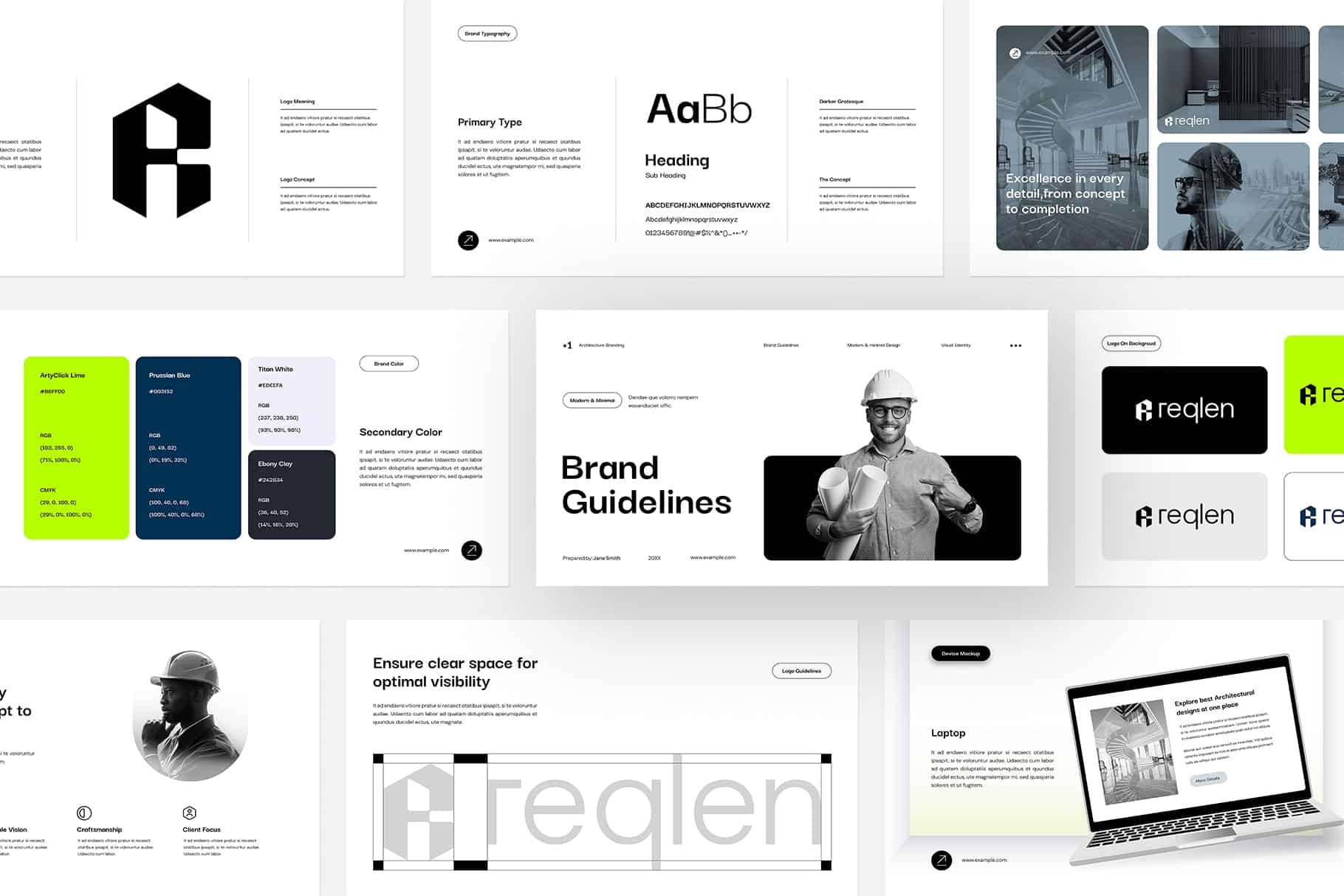
Minimal branding—characterized by restraint, clarity, and purposeful simplicity—has shifted from aesthetic preference to strategic necessity in 2025. As consumers navigate an environment saturated with 6,000 to 10,000 ads daily and face shrinking attention spans of just eight seconds, brands that embrace minimalism achieve demonstrable competitive advantages: 30% higher brand recall, 35% increases in e-commerce conversions, and 47% faster page load times. What began as a design trend in luxury and technology sectors has evolved into a comprehensive branding movement affecting everything from packaging and user experience to organizational identity and customer psychology. The underlying driver is not aesthetic preference but rather the fundamental mismatch between human cognitive capacity and digital information volume.
The Crisis That Created the Opportunity
The modern consumer faces an unprecedented information crisis. Every single day, users encounter between 6,000 and 10,000 distinct advertisements, compared to roughly 500 in the 1970s. Simultaneously, 4.6 billion pieces of content are created online daily, with 500 hours of video uploaded to YouTube every minute. This saturation has compressed human attention to an average of eight seconds—the threshold at which consumers unconsciously decide whether to engage or disengage with a brand.
This phenomenon is not merely perceptual; it reflects a genuine neurological constraint. Cognitive overload occurs when the human brain receives more information than it can process, leading to mental fatigue, distraction, and disengagement. In response, consumers have developed sophisticated filtering mechanisms—what marketers call “banner blindness” and “ad fatigue”—that cause them to systematically ignore cluttered, complex, or information-dense messaging.
The traditional response from brands has been counterintuitive: add more. More colors, more detail, more animation, more messaging. Yet this approach contradicts neuroscience research on human perception. According to principles of cognitive ease identified by Nobel laureate Daniel Kahneman, the brain naturally prefers stimuli that require minimal effort to process. When faced with complex or overwhelming designs, the brain interprets them not as sophisticated but as threatening, untrustworthy, or overwhelming. Minimal branding inverts this logic: by reducing information density, brands actually amplify their signal in an attention-starved marketplace.
How Minimalism Cuts Through the Clutter
The psychology underlying minimal branding’s effectiveness operates on three interconnected levels: perceptual, cognitive, and emotional.
Perceptual Distinctiveness Through Constraint
The human visual system is hardwired to detect anomalies. When examining a field of identical objects, our eyes are naturally drawn to whatever stands out. This principle applies directly to branding in saturated environments: a clean, uncluttered brand identity is far more visually distinctive than a complex one, precisely because the overwhelming majority of competing brands are using visual excess to capture attention. One study demonstrated this effect through an art gallery metaphor—paintings displayed against bare walls with no distractions command far greater attention than the same paintings surrounded by decorative elements. Minimal design functions identically in the digital landscape, using negative space and restraint as the canvas that allows the brand to command focus.
Cognitive Load Reduction and Decision Efficiency
Hick’s Law, a foundational principle of behavioral psychology, states that the time required for a person to make a decision increases with the number of choices presented. In ecommerce and digital environments, this translates directly to user behavior. When product pages are cluttered with excessive imagery, options, promotional messaging, and visual competing elements, customers experience decision paralysis. They take longer to understand what action to take, feel more uncertain about their choices, and ultimately experience higher abandonment rates.
Minimalist design systematically reduces this cognitive friction. By streamlining navigation to essential elements, limiting color palettes, and presenting information hierarchically, brands enable faster information processing. Simple logos are processed 30% more efficiently by the brain than complex ones, and this efficiency advantage compounds across entire user journeys. The result is measurable: form completion rates increase, cart abandonment decreases, and conversion rates improve by 35-42% on average.
Emotional Resonance Through Authenticity
Minimalist branding triggers specific emotional associations in consumer psychology. Clean, understated designs signal sophistication, professionalism, and trust. Neuroscience research demonstrates that the brain interprets minimalism as a proxy for honesty and transparency—the absence of ornamentation is read as confidence in the product itself rather than as an attempt to distract from inadequacy.
This effect is particularly pronounced in premium categories. Luxury brands from Loro Piana to Aesop have discovered that minimal packaging and branding not only attract high-net-worth consumers but also enable premium pricing precisely because restraint signals exclusivity. Consumers intuitively understand that a product requiring minimal visual embellishment to communicate its value must be truly exceptional. This perception shift is quantifiable: in luxury fashion, brands adopting minimalist strategies report 18% higher customer retention compared to logo-heavy competitors, and consumers explicitly state they would rather purchase from subtly-branded luxury than aggressively logoed mass market.
The Business Case: Quantified Returns on Simplicity
The business impact of minimal branding extends far beyond perception metrics. Implementation delivers measurable returns across three critical dimensions: revenue generation, operational efficiency, and technical performance.
Revenue and Conversion Metrics
E-commerce businesses implementing minimalist design principles report 35% increases in conversion rates and 42% growth in qualified leads. These improvements stem directly from reduced friction in the user journey. When consumers can quickly understand a value proposition, locate desired products, and complete transactions without confusion, purchase behavior accelerates.
Email marketing shows similar improvements, with minimalist campaigns generating 28% higher open rates. The mechanism here is straightforward: in crowded inboxes where dozens of promotional messages compete for attention, simple, clean email designs are more likely to be noticed and opened. Similarly, social media engagement increases by 51% when brands post clean, minimalist graphics rather than cluttered competitor content.
In the luxury sector, the conversion advantages are even more pronounced. Fashion and beauty brands reporting customer lifetime value and retention improvements cite minimalism’s role in fostering emotional connection and perceived authenticity. McKinsey research on luxury fashion demonstrates that 65% of luxury consumers now prioritize subtlety of design over brand name prominence—a fundamental shift in purchase drivers.
Operational and Cost Efficiency
Minimal branding reduces production and operational costs while improving scalability. Fewer design elements translate to simpler production workflows, reduced material usage, and lower design iteration costs. More significantly, simplified brand systems scale more efficiently across global markets, product lines, and digital platforms. A minimalist logo adapted to a smartphone screen, billboard, or packaging label remains instantly recognizable without requiring platform-specific redesigns.
The sustainability dimension adds further competitive advantage. By reducing materials, limiting ink usage, and simplifying production processes, minimalist packaging lowers environmental impact while simultaneously increasing perceived product value and brand authenticity. This alignment of aesthetic simplicity with sustainability values resonates particularly strongly with Gen Z and millennial consumers, who explicitly prioritize brand authenticity and environmental responsibility.
Technical Performance and SEO
The technical advantages of minimalism are quantifiable and directly impact customer acquisition. Minimalist websites load 47% faster than cluttered alternatives, a difference that compounds across millions of user sessions. This speed advantage has cascading effects: Google’s search algorithm prioritizes fast-loading pages, meaning minimalist sites achieve better organic search rankings. Bounce rates decrease by approximately 25% when users encounter fast-loading, intuitively navigable interfaces.
Mobile optimization amplifies these benefits. With 60-63% of global web traffic originating from mobile devices, minimalist design’s mobile-first approach is not optional—it is essential. Simplified layouts that work intuitively on small screens, thumb-friendly navigation patterns, and fast loading times create competitive advantages on the platforms where most customer interactions occur. Shopify’s analysis indicates that stores adopting minimalist design principles achieve 25% improvements in page load speed and corresponding increases in conversion rates.
Minimalism as Luxury Redefinition: The “Quiet Luxury” Movement
In 2025, minimalist branding has fundamentally reshaped how luxury is communicated and perceived. The shift from “loud luxury”—characterized by prominent logos, ornate packaging, and overt status signaling—to “quiet luxury” represents not a cyclical fashion trend but a structural reordering of luxury psychology in digital-first markets.
The 2025 branding landscape documents a remarkable 60% year-over-year increase in branding requests for “quiet luxury” implementation among fashion and luxury goods clients. This shift reflects converging consumer preferences: logo fatigue, environmental consciousness, digital saturation, and the rise of second-hand luxury consumption have collectively devalued traditional status signaling. Consumers now demonstrate greater willingness to pay premium prices for understated brands that communicate exclusivity through craftsmanship and restraint rather than visual prominence.
Brands exemplifying this shift—Jil Sander, The Row, Loro Piana, Augustinus Bader—have documented exceptional customer loyalty and premium pricing power precisely by refusing to compromise minimalist aesthetic with commercial pressure. Their success has created a paradox: the less visibly branded a luxury product, the higher its perceived value and willingness-to-pay among target consumers.
This phenomenon extends beyond fashion into beauty packaging, where minimalist design now dominates premium categories. Frosted glass containers with minimal typography, neutral color palettes of white, beige, and soft grey, and metallic accents used sparingly communicate quality and innovation more effectively than ornate, complex designs. The mechanism is psychological: consumers unconsciously interpret design minimalism as a proxy for formulation sophistication, assuming that a product requiring minimal visual enhancement must be genuinely effective.
The luxury sector thus demonstrates that minimal branding is not a compromise on brand presence but rather a fundamentally different expression of brand power—one that operates through restraint, clarity, and psychological association rather than through visual dominance.
The Neurological Foundation: Why Simplicity Works in the Brain
Recent advances in neuromarketing and consumer neuroscience have illuminated the biological mechanisms underpinning minimal branding’s effectiveness. The human brain processes information in fundamentally predictable ways that favor simplicity.
Gestalt Principles and Pattern Recognition
The brain’s visual processing system operates according to the Gestalt principles—fundamental laws of visual perception that explain how humans organize and interpret visual information. Particularly relevant is the principle of simplicity (Prägnanz), which states that people perceive and favor simple, stable forms over complex, ambiguous ones. A minimalist logo is instantly recognizable because it contains only the essential visual elements required to convey meaning, reducing the computational load on visual processing circuits.
Research published in the Harvard Business Review (2017) confirmed that simple logos drive significantly higher brand engagement than complex ones, with consumers showing greater trust, confidence, and recall for streamlined designs. The mechanism is neurological: simple visual stimuli are processed in the brain’s primary visual cortex with minimal resource consumption, freeing cognitive capacity for higher-order processing like decision-making and emotional response. Complex logos demand more cognitive resources to decode, potentially triggering a subtle stress response that manifests as distrust or disengagement.
Emotional Neutrality as Strategic Asset
One counterintuitive element of minimal branding is its embrace of emotional restraint. Where traditional branding seeks to evoke strong emotional responses through color saturation, visual drama, and animation, minimalism operates through a principle of “emotional neutrality”—the idea that by not overwhelming consumers with artificial stimulation, the brand allows them to form authentic emotional connections.
This approach aligns with emerging research in neuromarketing indicating that consumers are increasingly fatigued by manipulative emotional appeals in advertising. When exposed to aggressive marketing stimuli, the brain’s threat detection systems (amygdala) activate defensively, triggering skepticism and ad avoidance. Minimalist design, by contrast, communicates confidence and authenticity that activate the brain’s reward and trust circuits (ventromedial prefrontal cortex), fostering genuine emotional engagement rather than defensive skepticism.
Memory Formation and Recall
Minimalist design enhances memory formation through multiple cognitive pathways. First, simple, distinctive designs are more effectively encoded into long-term memory due to reduced cognitive interference—the brain faces less competition between visual elements for attentional resources. Second, minimalism creates opportunity for what neuroscientists call “distinctive encoding”: when a brand stands out through restraint rather than conforming to the visual excess of competitors, this distinctiveness triggers stronger memory consolidation.
Research demonstrates that minimalist brand recall exceeds complex branding by approximately 30%, a statistically significant advantage that directly impacts purchase behavior. When consumers encounter a product at point of purchase after limited prior exposure, minimalist branding’s superior memorability translates into higher conversion rates. This finding contradicts the intuitive assumption that more visual information leads to better memory; the neuroscience actually shows the opposite.
Critical Limitations and When Minimalism Fails
While the evidence supporting minimal branding is substantial, the approach carries genuine risks and is not universally applicable. Understanding these limitations is essential to strategic implementation.
The Oversimplification Trap and Loss of Brand Essence
The most dangerous pitfall in minimal branding is confusing simplicity with blandness. Oversimplification—removing elements until a brand becomes generic and undifferentiated—destroys brand equity precisely because it fails to preserve brand essence. The infamous Gap logo redesign of 2010 exemplifies this failure. Gap replaced its iconic navy blue logo with a minimalist wordmark that consumers perceived not as refined but as generic, bland, and disconnected from brand heritage. The backlash was swift and total: the company reverted to the original logo within six days.
Similarly, Tropicana’s 2009 packaging redesign attempted to modernize through minimalism but stripped away the distinctive orange imagery that had defined the brand for decades. Within two months, revenue declined 20% as consumers failed to recognize the product and experienced the redesign as a loss of brand identity rather than an evolution.
These failures reveal a critical distinction: effective minimal branding preserves brand essence through intentional design choices, while failed minimalism simply removes elements indiscriminately. The successful minimalists—Apple, Stripe, Notion—maintain distinctive brand signatures precisely because they use restraint to amplify one core element rather than to erase all distinctiveness.
The Sameness Problem in Oversaturated Markets
As minimalism has become standard practice across industries, it has created an unintended consequence: convergence toward visual homogeneity. Too many brands now employ nearly identical design systems—sans-serif typography, white space, neutral color palettes—creating a landscape where minimal brands risk becoming indistinguishable from one another. This “invisibility dilemma” undermines the very differentiation advantage that minimal branding initially provided.
The solution lies not in abandoning minimalism but in deepening it. The most successful minimal brands in 2025—Stripe, Figma, Linear, Notion—achieve differentiation not through visual complexity but through signature elements: Stripe’s distinctive purple, Notion’s modular block metaphor, Figma’s collaborative ethos expressed through interface design. This evolution, which some design practitioners call “signature minimalism,” maintains simplicity while incorporating one bold, memorable element that functions as a brand anchor.
Socioeconomic and Cultural Variations
Research has documented important variations in how minimalism is received across consumer segments. Consumers with lower socioeconomic status show less favorable responses to minimalist branding, as these consumers typically prefer quantity over quality in daily consumption—a preference fundamentally incongruent with minimalism’s value proposition. This variation has significant market segmentation implications: minimalism may be strategic for premium and affluent consumer bases while requiring modification for value-conscious segments.
Similarly, minimalism’s effectiveness varies across cultures and regions. While minimalism has strong appeal in Northern Europe and parts of North America, it may require cultural adaptation in markets where visual abundance signals abundance and prosperity. Neuromarketing research indicates that emotional responses to visual simplicity versus complexity are partially culturally constructed, suggesting that truly global minimal branding requires sophisticated regional customization.
The Premium Perception Risk
Counterintuitively, minimal branding can sometimes communicate “too little” rather than “just enough,” leading consumers to question whether the product justifies its positioning. If a brand attempts to position as premium while employing aggressive minimalism without corresponding investment in product quality communication, storytelling, or heritage narrative, consumers may perceive the brand as underfunded or uncertain about its own value.
This risk highlights a critical implementation principle: minimalism must be paired with depth in other dimensions. Minimal aesthetic combined with rich storytelling of craftsmanship, sustainability, or heritage creates the balanced signal of quiet luxury. Minimal aesthetic combined with silence about product benefits creates only confusion.
Implementation Framework: From Theory to Execution
Translating minimal branding principles into operational reality requires systematic thinking across design, technology, and organizational communication.
Design Execution: The Three Layers
Effective minimal branding operates across three integrated layers. The first layer is graphic identity—logo, typography, color palette, and foundational visual elements. Here, the principle is “surgical precision”: preserve exactly one distinctive element that functions as a brand anchor, eliminate everything that does not serve core brand recognition or communication.
The second layer is information architecture and user experience. This encompasses website navigation, product categorization, content hierarchy, and interface layout. Minimalism here means eliminating decision points, simplifying navigation structures, and ensuring that the most important information or action is immediately visible without scrolling or searching.
The third layer is content strategy. Minimal branding requires equally minimal, focused messaging. Rather than multiple value propositions competing for attention, minimal branding communication should articulate a single, clear value proposition supported by precisely selected evidence. Every word must earn its place; every visual element must serve the communication objective.
Technical Integration: Speed as Brand Expression
In 2025, technical performance is inseparable from branding. A minimalist visual identity combined with bloated, slow-loading pages creates cognitive dissonance that undermines brand authenticity. Implementation therefore requires treating performance optimization as a brand design discipline.
This means aggressive image optimization, lazy-loading of below-fold content, minimization of JavaScript and CSS files, and mobile-first architectural decisions. The technical infrastructure should be as streamlined as the visual identity, with the loading experience itself functioning as brand communication: fast, clean, and focused.
Organizational Alignment: Avoiding Inconsistent Application
Perhaps the most underestimated implementation challenge is organizational alignment. Minimal branding requires discipline across marketing, product development, customer service, and communications functions. When different departments apply the brand inconsistently—some maintaining minimalist discipline while others introduce unnecessary elements—the coherence that makes minimalism powerful is lost.
This requires clear brand guidelines that document not just visual standards but the underlying philosophy. Teams need to understand not just what the minimal brand looks like but why it is minimal—the psychology, business objectives, and user experience principles that drive the approach. This philosophical grounding enables consistent decision-making across the organization without requiring constant design review.
The Future Landscape: Evolution Beyond Aesthetics
Minimal branding in 2025 has evolved beyond pure aesthetics into a comprehensive business strategy. The emerging frontier involves marrying minimalist design principles with artificial intelligence and personalization technologies.
Adaptive Minimalism and AI-Driven Personalization
The rigid minimalism of previous eras—strict adherence to a fixed set of design rules across all contexts—is giving way to what some practitioners call “adaptive restraint”: minimalist frameworks that remain consistent in principle while responding dynamically to individual user context.
Artificial intelligence enables brands to maintain minimalist clarity at the system level while personalizing expression at the individual level. A minimalist website, for instance, can present simplified navigation for all users while dynamically emphasizing different product categories, messaging, or visual highlights based on individual user behavior and preferences. The interface remains minimal and clear for everyone; the expression becomes personalized without adding complexity.
Neurodesign Integration
Neuromarketing tools in 2025 are increasingly integrated into minimal branding implementation. Rather than relying on intuition about which elements are truly essential, brands now test candidate designs using biometric measurement of consumer responses: pupil dilation patterns, facial micro-expressions, and implicit attention tracking reveal which design elements actually capture attention and process information efficiently.
This data-driven approach to minimalism ensures that design reductions are based not on designer intuition but on neurological evidence of what consumers actually process and remember. The result is a new genre of “neuro-minimalism” where design choices are validated through measurable cognitive and emotional response data.
Sustainability as Core Identity
The alignment of minimal branding with sustainability is becoming increasingly central to brand positioning. As consumers increasingly associate visual restraint with environmental consciousness, brands are formalizing this connection through messaging, material choices, and supply chain transparency. Minimal packaging becomes not merely aesthetic choice but explicit communication of environmental values.
Conclusion: The Permanence of Simplicity
Minimal branding is winning not because it is trendy but because it solves a structural problem: how to communicate authentically in an attention economy where consumers face impossible information volume and unconscious distrust of aggressive marketing.
The convergence of cognitive science, neuromarketing, digital saturation, and consumer value shifts has created conditions where simplicity is not just preferred but functionally necessary. Brands that embrace minimal aesthetics while maintaining strategic depth—preserving one distinctive element, combining minimalist design with rich storytelling, and treating technical performance as brand expression—achieve measurable advantages in brand recall (30% improvement), conversion rates (35-42% improvement), and long-term customer value.
Yet minimalism is not panacea. Its effectiveness depends on rigorous philosophical grounding, organizational discipline, and resistance to both under-differentiation and the impulse to reintroduce clutter when competition intensifies. The brands dominating in 2025 are not those that removed the most elements, but those that removed everything inessential while amplifying what truly matters.
In a world of infinite choices and limited attention, the most powerful branding statement may be the quietest one: “We understand that your time is valuable. This is what we offer. Nothing more. Nothing less.”